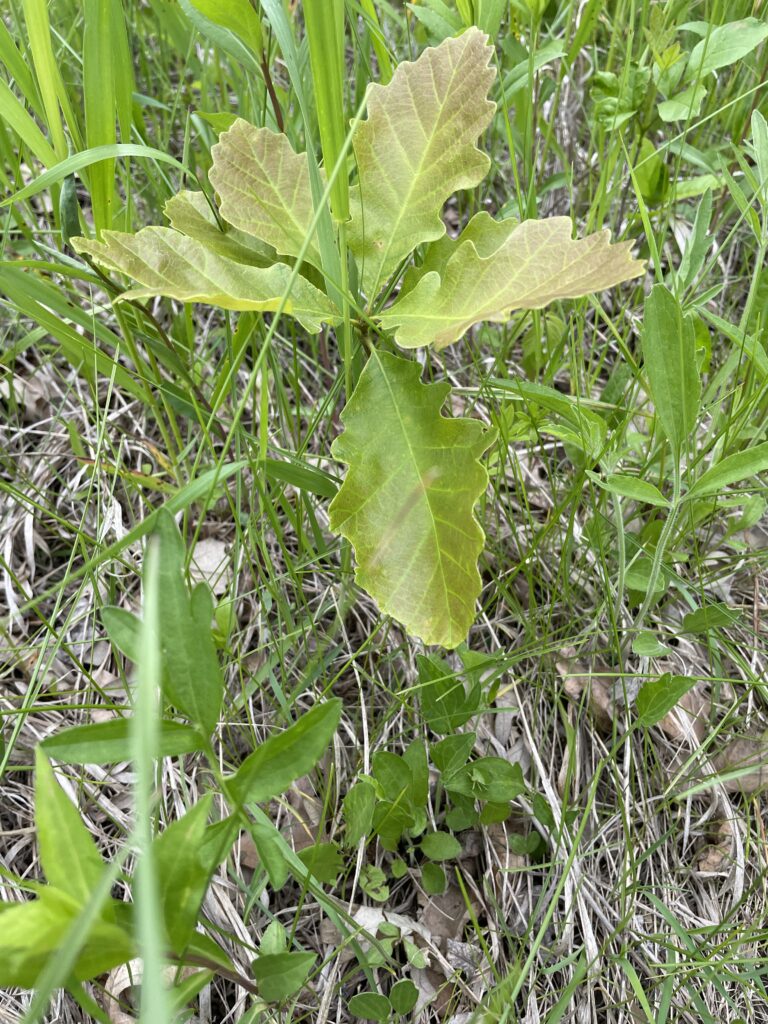
Sign Up to Gather Them Here
Where?
Our local parks.
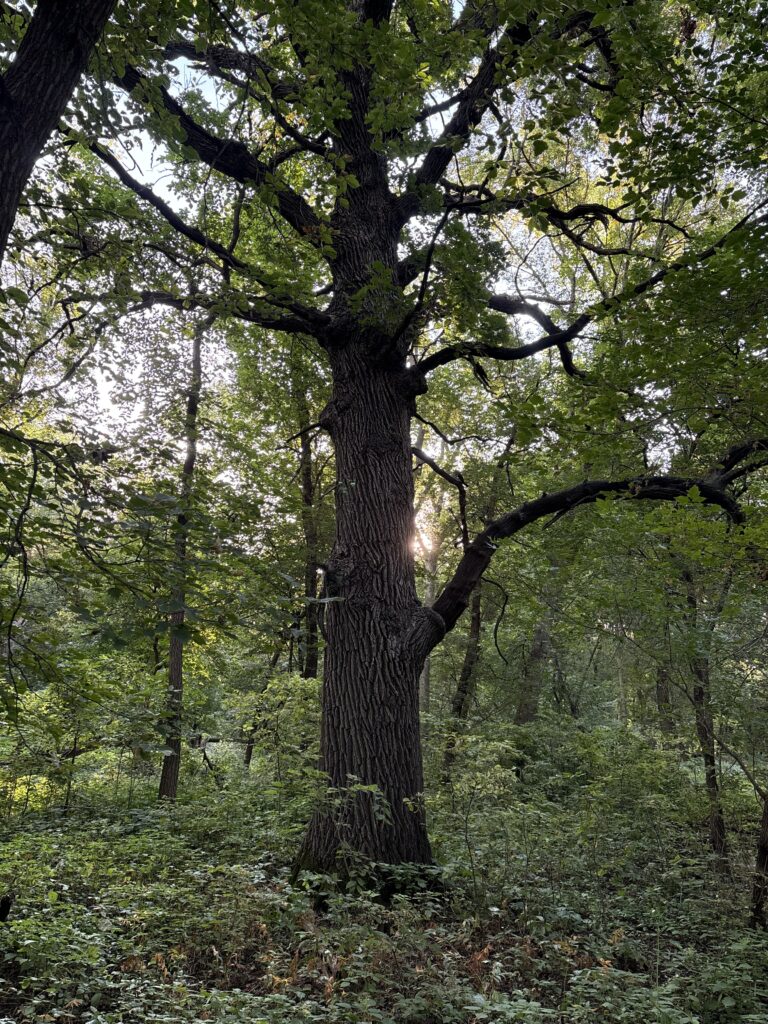
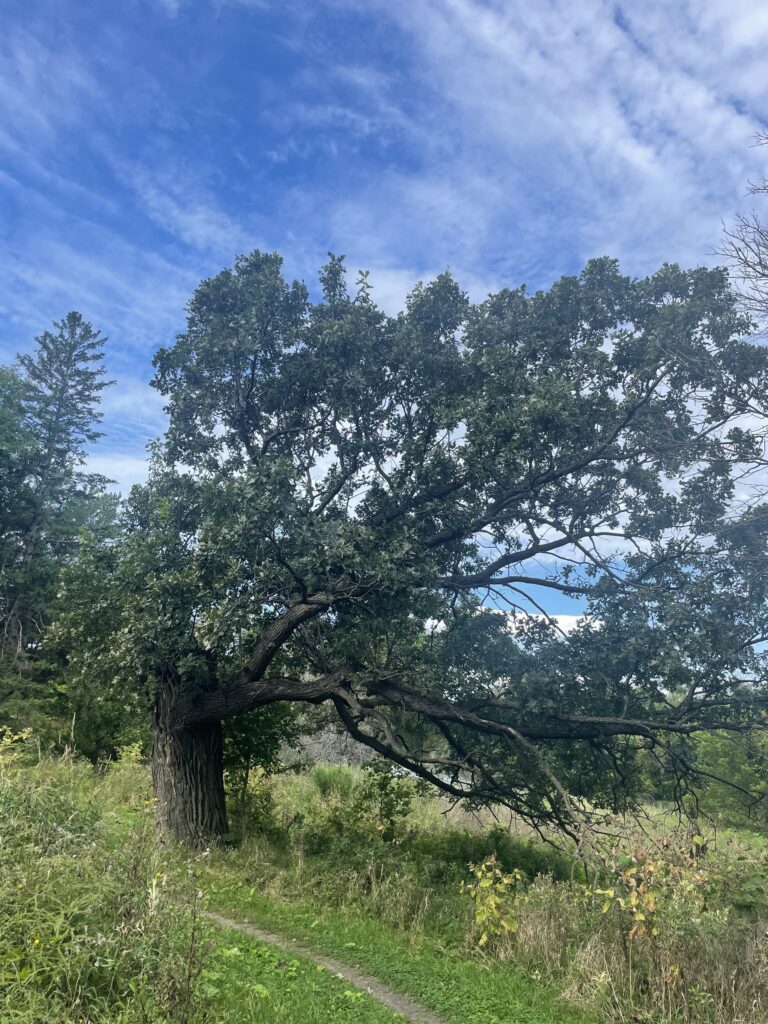
I have spent the past few years looking for the elder Bur Oaks in our park forests and public lands. Generally the ones I have found are around 200-250 years old (although I would love to work with a specialist to verify that).
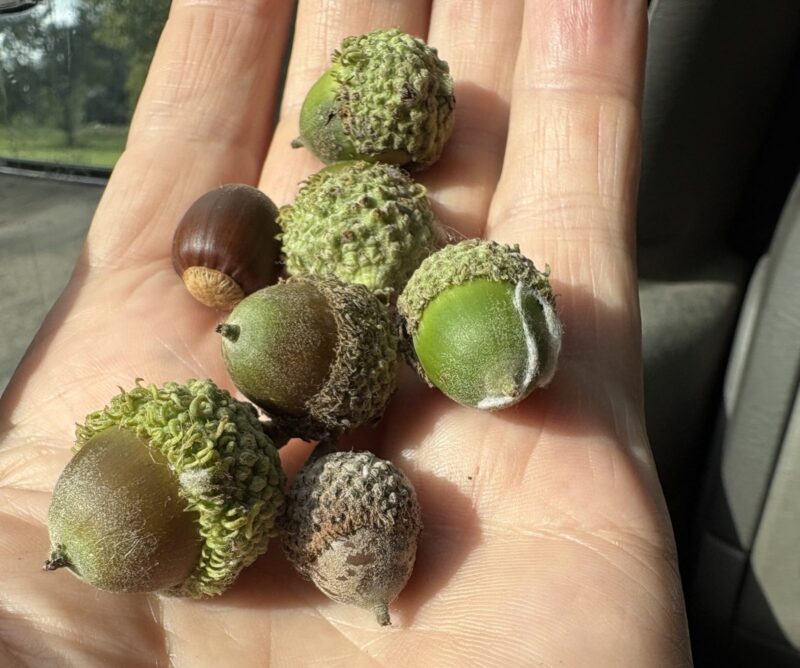
Somewhere along the way I started gathering Bur Oak acorns and then studied how to grow them. Some friends and I began to talk about the work and explore ways to involve others. For instance, one friend explained that Bur Oak provides a “provisioning service” suppyling abundant resources in food, shelter and materials within an ecosystem. He found a very prolific Oak on the NDSU campus and stratified (winter-chilled) many acorns from that tree last winter. This cold storage process is one way acorns can be harvested and planted. Sign up here.
Why?
“Why not? Many of our public parks and lands are disturbed and threatened by invasive species, while climate change compounds the problem. Keystone species like the Bur Oak are increasingly unable to maintain a foothold, and the loss ripples outward.
In our region, Bur Oak hosts some 250 species of butterfly and moth caterpillars, more than any other native tree. A 2025 NatureServe-led study found that over one in five native North American pollinators, including more than a third of native bee species, now face an elevated risk of extinction. As Bur Oak numbers diminish, whole ecosystems collapse.
Another friend and specialist in the field of sustainability recently told me that there are communities of people south of us gathering acorns to be sent to us so that there are oaks here ready to endure our changing climate through the next decades. This is another reason to begin collecting from our local trees. After all, it takes at least 40 years for a Bur Oak to begin producing acorns.
When?
The drop seems to be starting. It will run at peak for several weeks. We are looking for volunteers to lead and gather acorns during that time. There are different views about the best time of day to harvest but early evening will likely be when we send people out, before the nocturnal foragers arrive.
How?
Details on the process will be available for any group of volunteers. However, the process is pretty simple. A 5-gallon bucket, a rake, some gloves and a small gathering tool like a scoop or shovel will help.
Others are taking from the acorn bounties nature provides however, and there are many guidelines for harvesting in a manner that maintains good relations with the land. I have found the chapter titled “The Honorable Harvest” from Robin Wall Kimmerer’s book “Braiding Sweetgrass” both illuminating and inspirational. A few recommendations she offers in this chapter are: never take the first, never take more than half, and make an offering in return.
With Who?
We will be trying to gather and organize volunteers but we welcome you to create your own group. We would love to see a class of elementary students dedicated to the acorns of one tree in the neighborhood. Or maybe a church, men’s group, or a high school restoration club would like to serve as acorn stewards for a particular tree. We would like to support any of your ideas for bringing communities of people into communion with their local lands and its restoration.
Planting?
Bur Oak acorns, and all white oaks acorns germinate in the fall. They send their taproot into the ground through the fall and winter, increasing their chances of survival through drought. After gathering the acorns we will demonstrate a fall acorn planting. This starts with an evaluation of the acorns called a float test. In advance of the event, an empty tin can will be prepared for use over the planted acorn. These cans are fire treated in advance to burn off the rust prevention coating, then punctured in order for the germinating seed to rise up in the spring. This is known as the “Droste can” method.
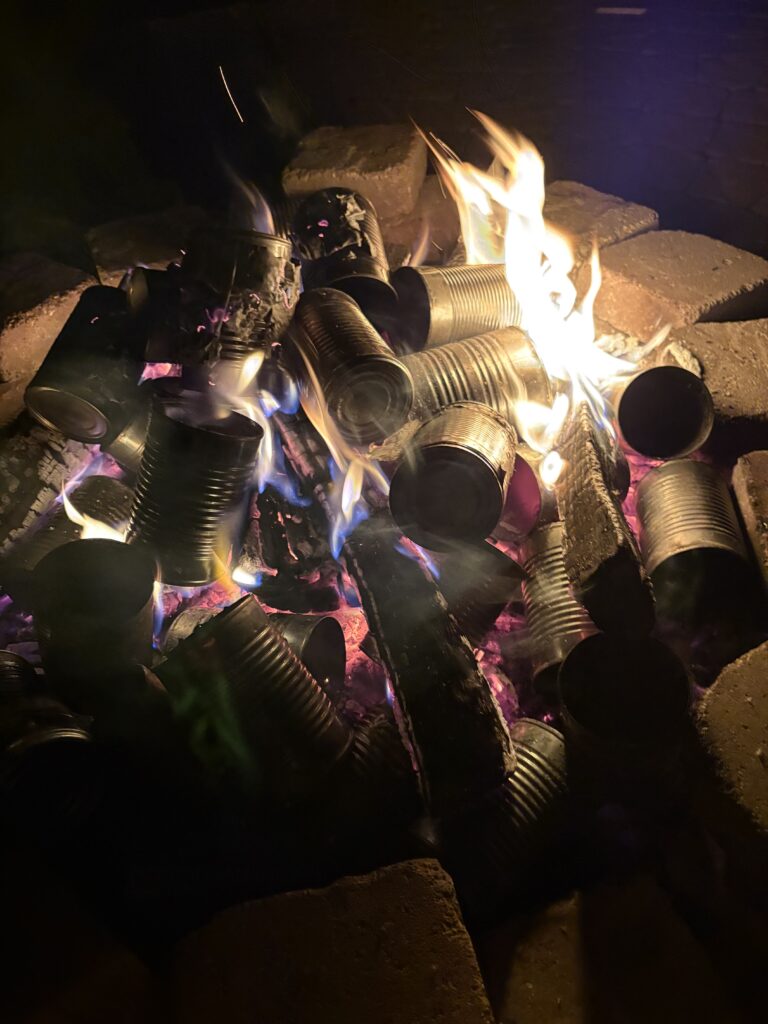
Bring tin cans if you want to plant some of the acorns on property you care for.
When signing up you will have options. You can just sign up to volunteer, or you can become an organizer. Organizers can host gatherings at particular trees or parks, organize participants and develop plans for plantings, seed storage, and tree maintenance.
As these seeds go from acorns to saplings the community can work collectively to nurture the next generation of elders. A friend has been talking about a database and geolocation system where we can mark, and manage this new growth online. We are working with supportive city park managers to facilitate this work. I also know of other friends and gifted chefs who could create some delicious creations from the harvest. If this project is germinating something in you, please spread the word!